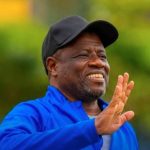
Nigerian football has entered a major period of uncertainty after Nigeria Football Federation (NFF) President Ibrahim Musa Gusau, General Secretary Mohammed Sanusi and members of the NFF Executive Committee resigned from their positions.
The development was officially confirmed on Thursday, August 27, 2026, following mounting pressure over the recent performances of Nigeria’s national teams and growing calls for reforms within the country’s football administration.
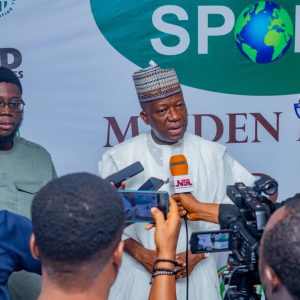
Gusau confirmed his resignation at a press conference at the NFF Secretariat in Abuja, saying his decision followed consultations with his family, friends and stakeholders within Nigerian football.
According to the NFF president, his resignation was intended to create room for a comprehensive and orderly reform process aimed at addressing longstanding institutional, governance and developmental challenges in Nigerian football.
Why Did the NFF Leadership Resign?
The mass resignation comes at a difficult time for Nigerian football.
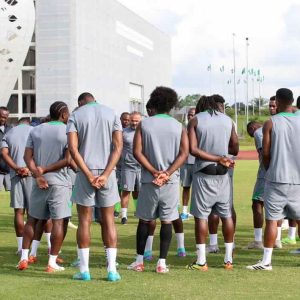
The Super Eagles failed to qualify for the 2026 FIFA World Cup, while the Super Falcons missed out on qualification for the 2027 FIFA Women’s World Cup.
The Falcons’ failure was particularly significant because Nigeria had appeared at every previous edition of the Women’s World Cup since the competition began in 1991.
Nigeria’s age-grade teams have also experienced qualification setbacks, adding to concerns about the direction of the country’s football development system.
The results generated significant criticism from supporters, former players, coaches and other football stakeholders, increasing pressure on the NFF leadership.
Gusau Leaves 34 Days Before the End of His Tenure
Gusau was elected NFF president in September 2022 and was originally expected to complete his four-year tenure in September 2026.
However, his resignation came 34 days before the scheduled end of his tenure.
In his farewell remarks, Gusau defended aspects of his administration, pointing to developments in coaching education, domestic football, refereeing and infrastructure.
He also highlighted the construction of a 68-room players’ hostel and additional training pitches at the MKO Abiola National Stadium, as well as Nigeria’s medal-winning performances at recent Africa Cup of Nations tournaments and the Super Falcons’ WAFCON triumph in 2025.
What Happens to the NFF Now?
The immediate future of Nigerian football administration will now be shaped by an interim arrangement.
The National Sports Commission has endorsed Dr Emmanuel Ikpeme, the former NFF Deputy General Secretary, to oversee the NFF Secretariat as interim General Secretary.
Dr Ademola Olajire, formerly the NFF Director of Media and Communications, will serve as interim Deputy General Secretary.
The NFF has also announced that preparations for the previously scheduled September 27 elective congress have been suspended.
A fresh electoral process is expected to begin after the proposed comprehensive reforms, with consultations involving FIFA, CAF, the Nigerian government and other football stakeholders.
A New Chapter for Nigerian Football
The leadership change represents one of the biggest moments in Nigerian football administration in recent years.
The immediate challenge will be ensuring that the transition does not create further instability within the country’s football system.
There will also be questions over who should lead the next phase of Nigerian football, how the electoral process will be conducted and what reforms are required to improve governance, accountability and the development of the sport.
For Nigerian football supporters, the hope is that the leadership crisis will ultimately produce a stronger and more transparent football administration.
What the NFF Leadership Change Means
The resignation could have major implications for several areas of Nigerian football, including:
- NFF governance and administration
- National team management
- Domestic league development
- Youth football
- Women’s football
- Coaching and referee development
- NFF finances and accountability
- Future elections
- Nigeria’s relationship with FIFA and CAF
The transition will therefore be closely watched by football stakeholders across Nigeria and beyond.
The Road Ahead
The resignation of Gusau, Sanusi and the Executive Committee does not immediately solve the problems facing Nigerian football.
Instead, it opens the door to a potentially significant restructuring of the country’s football administration.
The next leadership will inherit the responsibility of rebuilding confidence, strengthening Nigeria’s national teams and creating a football development system capable of producing sustainable results.
For now, Nigerian football stands at a crossroads.
The big question is no longer simply who will replace the outgoing NFF leadership, but what kind of football administration Nigeria wants going forward.
Key Details
- NFF President: Ibrahim Musa Gusau — resigned
- NFF General Secretary: Mohammed Sanusi — resigned
- NFF Executive Committee: Members resigned
- Resignation date: August 27, 2026
- Interim General Secretary: Dr Emmanuel Ikpeme
- Interim Deputy General Secretary: Dr Ademola Olajire
- Previous election date: September 27, 2026
- New electoral process: To begin after the reform process
- Key stakeholders: NFF, FIFA, CAF, National Sports Commission and Nigerian football stakeholders
Final Word
The resignation of the NFF leadership marks a defining moment for Nigerian football.
With the country’s national teams facing recent qualification setbacks and calls for structural reform growing louder, the transition provides an opportunity to rethink how Nigerian football is governed and developed.
The focus now shifts to the reform process, the eventual electoral roadmap and the people who will be entrusted with leading Nigerian football into its next chapter.